 Image 1 of 1
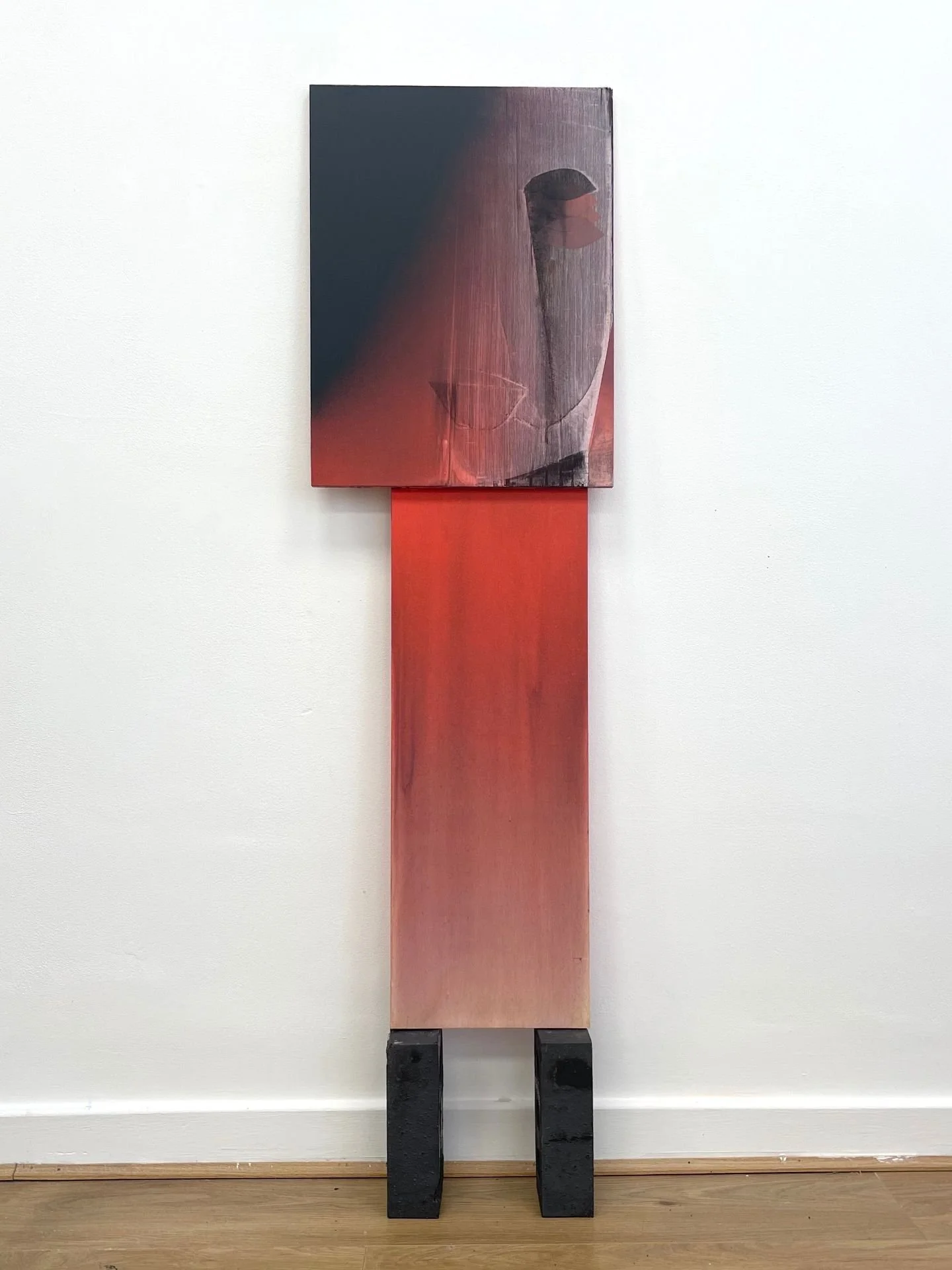
Watercolour, gouache & enamel on joined birch plywood with bricks
102 x 40 cm
2024
Recent work explores origin stories and the meeting point of human and technology to consider how painting might shape ideas of truth. A group of paintings called ‘Composites’ draw on stills from the first CGI facial animation produced in 1974 by computer graphics researcher Frederic Parke. These works present speculative images of the human face as stand-ins for a now pervasive technology.
Over extended periods of time, layers of drawing, watercolour and gouache paint are built up and dissolved exposing glitches, previous actions and the grain of the plywood support. Further associations enter the work when the painted panels are combined in different configurations or supported by bricks, brackets, or drum stands. Abbreviated bodies or anatomical details are implied as faces emerge in a state of flux somewhere between the flat and illusionary, and fact and fiction.