 Image 1 of 1
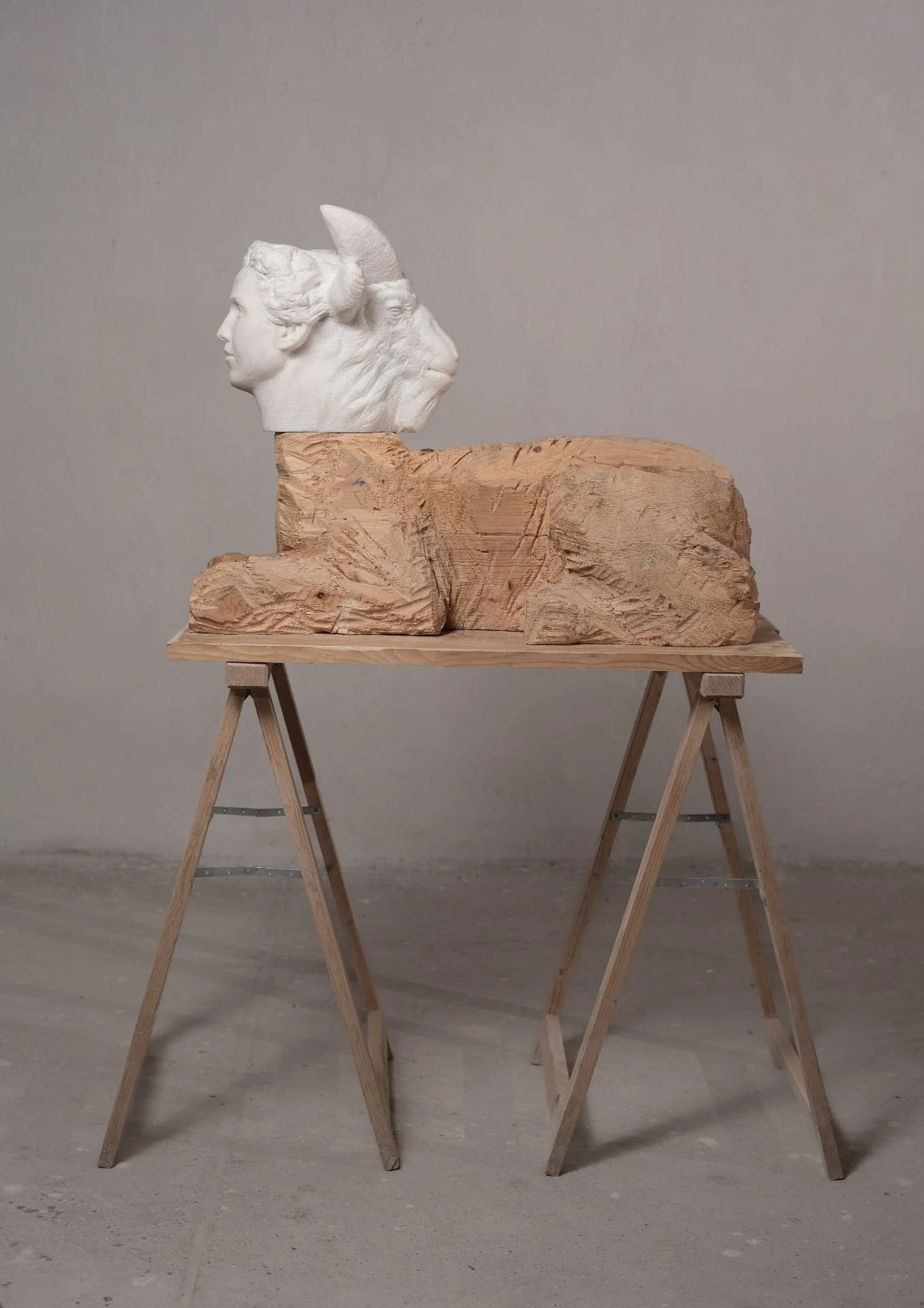
Hand carved Portuguese marble and pine
160 x 100 cm
2025
Irena Posner works with sculpture and performance, using material as a conceptual structure through which desire is organised via allegorical figures of animals, hybrids, and bodily fragments.
Rooted in ancient carving traditions and Hellenistic motifs, sculpture is treated as a system for thinking through processes of shaping: how stone is conditioned by social structures and transformed through labour-intensive carving into forms that resemble more pliable materials. This material dissonance exposes the permeability of ideological and somatic boundaries. Animal and bodily fragments recur as allegorical forms that mediate desire, control, vulnerability, and transformation.
Stone operates as both medium and subject. Its resistance, weight, and historical associations are activated through repetitive carving, foregrounding duration, effort, and embodied knowledge. By making the conditions of production visible, Posner positions labour not as a hidden process but as a primary aesthetic and conceptual concern.